Contact Sales Team
In hardware design, we are conditioned to default to chemical batteries for energy storage. But as applications demand faster charging, broader temperature resilience, and longer lifespans, engineers are increasingly forced to look beyond lithium.
We have discussed the mechanics of this shift before in our post, Supercapacitors, the Future of Energy Storage, exploring how these components act as “middle-distance runners”—bridging the gap between a battery’s high energy density and a standard capacitor’s rapid power delivery.
Usually, supercapacitors are hidden away in industrial uninterruptible power supplies (UPS) or automotive regenerative braking modules. But a French startup has just put this technology front and center by doing something radical: building an e-bike entirely without a battery.
The Pi-POP: Rethinking the Power Architecture
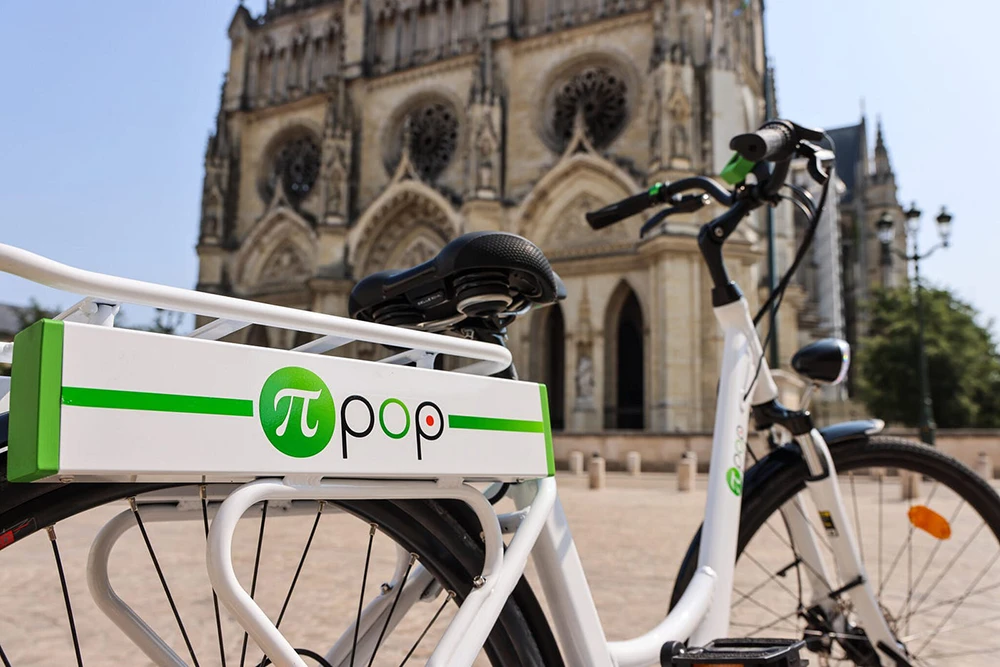
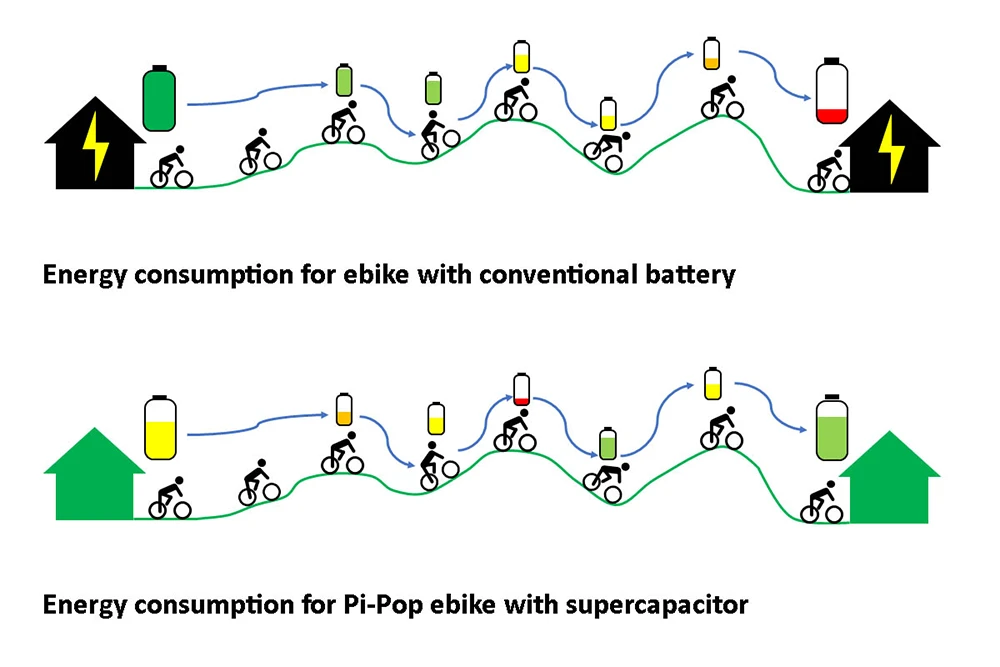
The Pi-POP is a newly developed e-bike that relies exclusively on supercapacitors for pedal assistance. Instead of plugging the bike into the wall for a three-hour charge, the power system harvests energy dynamically while in motion.
The system operates across three distinct charging phases: pedaling on flat terrain, braking, and freewheeling downhill. Because supercapacitors feature exceptionally high specific power (W/kg), they can absorb energy almost instantaneously—charging in just 1 to 10 seconds. Any one of these phases is enough to replenish the energy required to assist the rider when accelerating again.
The Engineering Trade-Offs: Why Ditch the Battery?
For engineers designing mobility, IoT, or industrial applications, swapping a traditional Li-ion pack for a supercapacitor bank solves several critical failure points:
- Eliminating Capacity Degradation: A standard e-bike battery degrades over time, typically requiring replacement within 3 to 5 years. Supercapacitors rely on an electrostatic process rather than a chemical reaction, allowing them to last up to 15 years with virtually zero capacity loss over hundreds of thousands of cycles.
- Extreme Temperature Resilience: Chemical batteries struggle in the cold. Supercapacitors operate flawlessly in harsh environments, maintaining performance from -40°C to +65°C.
- Safety and Compliance: Without lithium or heavy metals, supercapacitors eliminate the risk of thermal runaway. This dramatically simplifies compliance, safety testing, and shipping logistics.
- Instantaneous Torque: High specific power means the system can deliver a massive burst of energy on demand—perfect for launching a heavy bike from a dead stop.
The Catch: Wh/kg vs. W/kg
Honest engineering requires understanding constraints. The reason supercapacitors have not replaced batteries in every application comes down to specific energy.
The Pi-POP works brilliantly for stop-and-go urban commuting where constant braking recharges the system. However, there is a clear physical limit to this architecture:
What Are You Building Next?
The Pi-POP is a perfect example of how rethinking standard power architecture can result in a highly disruptive, sustainable product. Whether you are designing the next generation of e-mobility, a remote IoT sensor node, or an industrial automation system, the line between battery and capacitor is blurring.
Knowing when to use a supercapacitor—and selecting the exact right component for the job—can make or break your prototype.
That is where we come in. At Telcona, we do not just supply parts; we leverage years of hands-on experience in the energy storage field to act as your engineering partner. We know the specs, we understand the trade-offs, and we can help your hardware team navigate the transition to next-generation power components.
Are you exploring supercapacitors for an upcoming project? Reach out to the Telcona team today, and let's engineer a smarter power solution together. Contact us here.