Contact Sales Team

Ultraviolet is often treated as a single technology, but it spans three bands, UVA, UVB and UVC, which do different jobs, cost different amounts and sit at very different stages of industrial maturity. Treating them as one category is an easy way to get a UV specification wrong.
This article places ultraviolet within the optical spectrum, zooms into its three bands and sets out what each one is used for.
Where ultraviolet sits
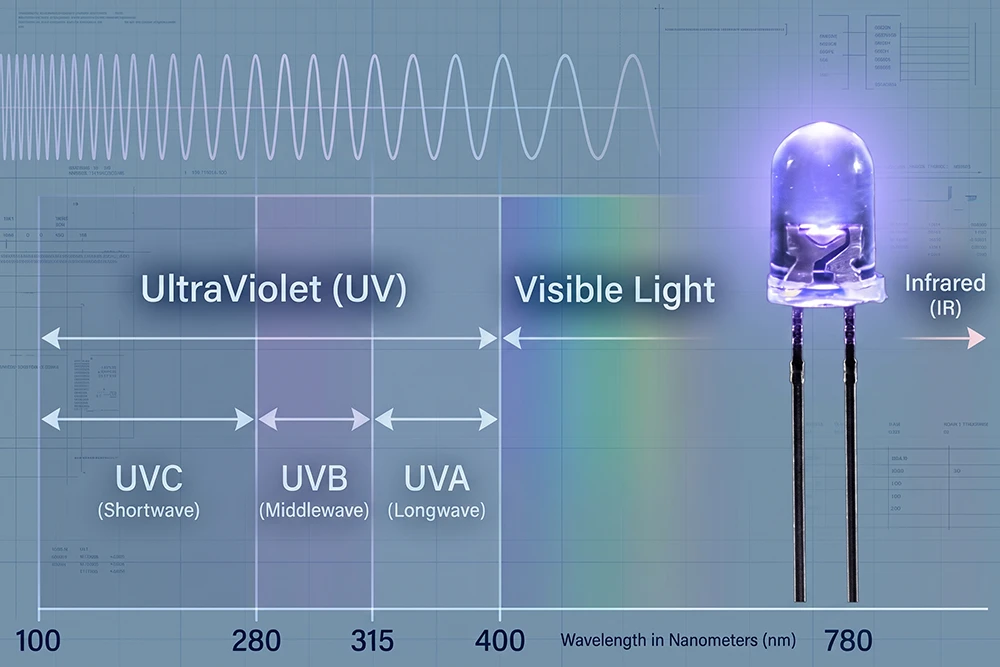
Optical radiation runs from the ultraviolet, through the narrow slice our eyes respond to known as visible light, into the infrared. Ultraviolet occupies 100 to 400 nm.
The boundary between UV light and visible light is softer than it looks. The International Commission on Illumination (CIE) defines visible radiation as optical radiation capable of causing a visual sensation directly, and states plainly that there are no precise limits: the lower edge is generally taken between 360 and 400 nm, the upper between 760 and 830 nm. Infrared is conventionally taken to run from 780 nm to 1 mm.
This is why a 400 to 410 nm LED can be described by one supplier as UV and by another as violet, and why both are defensible.
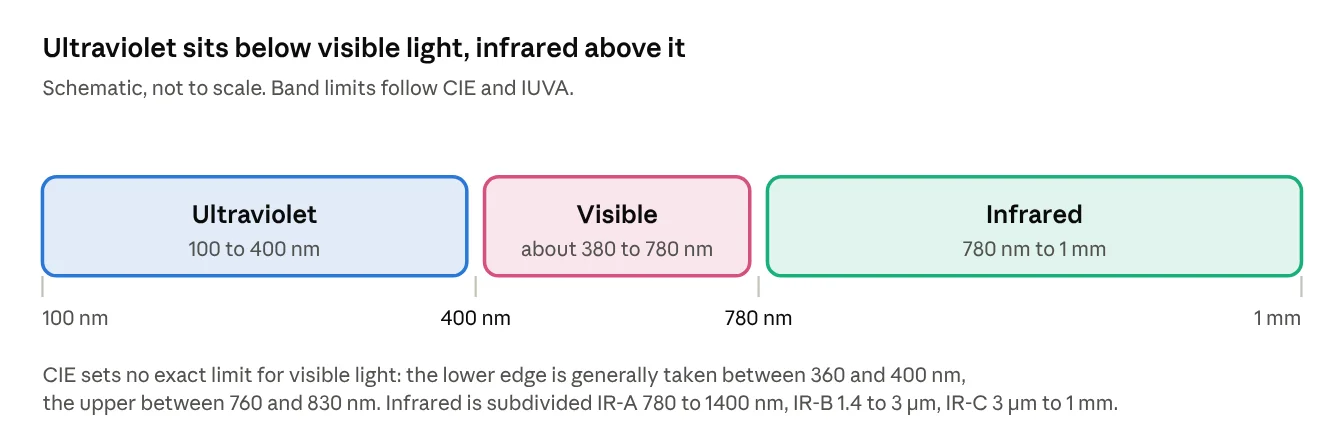
Figure 1. Where ultraviolet sits in the optical spectrum.
The three ultraviolet bands
Ultraviolet is divided into three bands. Under the ISO and CIE conventions they are UVC at 100 to 280 nm, UVB at 280 to 315 nm, and UVA at 315 to 400 nm.
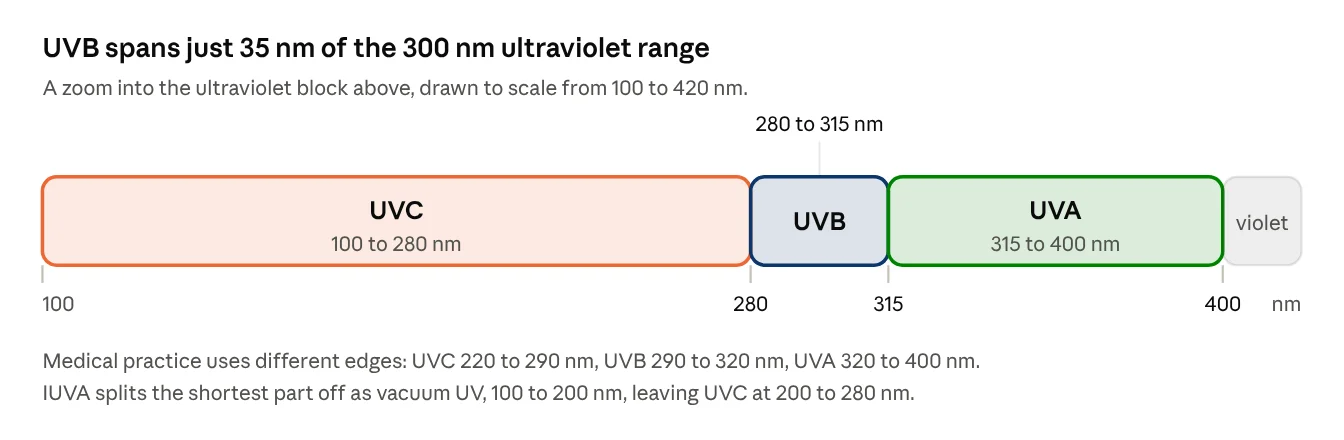
Figure 2. The three ultraviolet bands.
Before reading a supplier's specification, note that the boundaries are not universal. Medical literature commonly places them at UVC 220 to 290 nm, UVB 290 to 320 nm and UVA 320 to 400 nm, which moves every boundary below 400 nm. A lamp sold as UVB in one field can be UVA in another.
What matters commercially is that the three bands are not equally developed.
- UVA is mature, efficient and widely available, and has long been the largest UV LED market.
- UVC and UVB, the deep-UV bands, convert only a small fraction of their input power into light.
- UVB is the narrowest of the three and the least developed commercially.
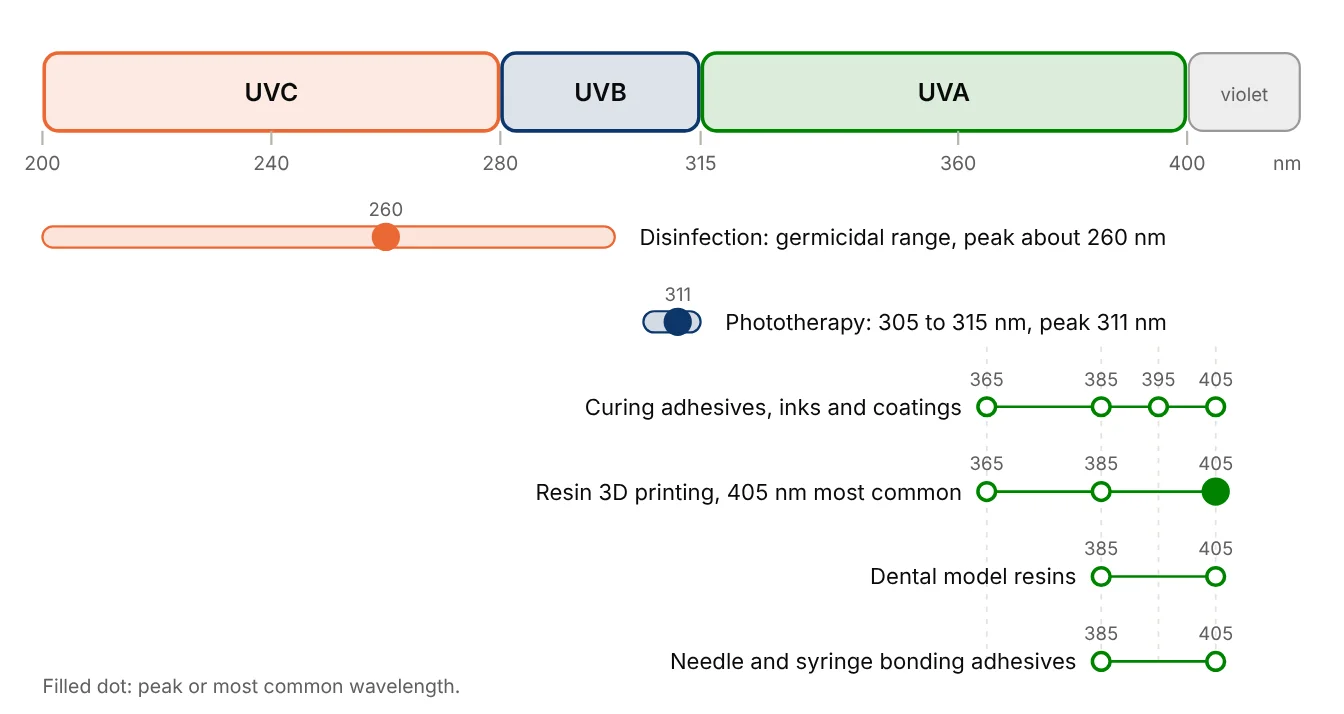
Figure 3. Where real applications sit on the UV scale. A filled dot marks the peak or most common wavelength.
UVA, 315 to 400 nm
This is the mature end of the spectrum, and UVA LEDs are the most efficient and most widely used UV LEDs.
- Curing adhesives, inks and coatings. Curing has long driven demand for UVA LEDs. Wavelength choice here is decided by chemistry. Light below 365 nm cures the surface very quickly, and that hardened skin then blocks the light from reaching the material underneath, while 385 nm and above cures more uniformly, penetrates thicker sections and bridges larger gaps. This is relevant to industrial equipment builders making curing lamps; automotive electronics, where adhesives, potting compounds and lens bonding are cured in line; and medical device assembly, where needle and syringe bonding adhesives are cured.
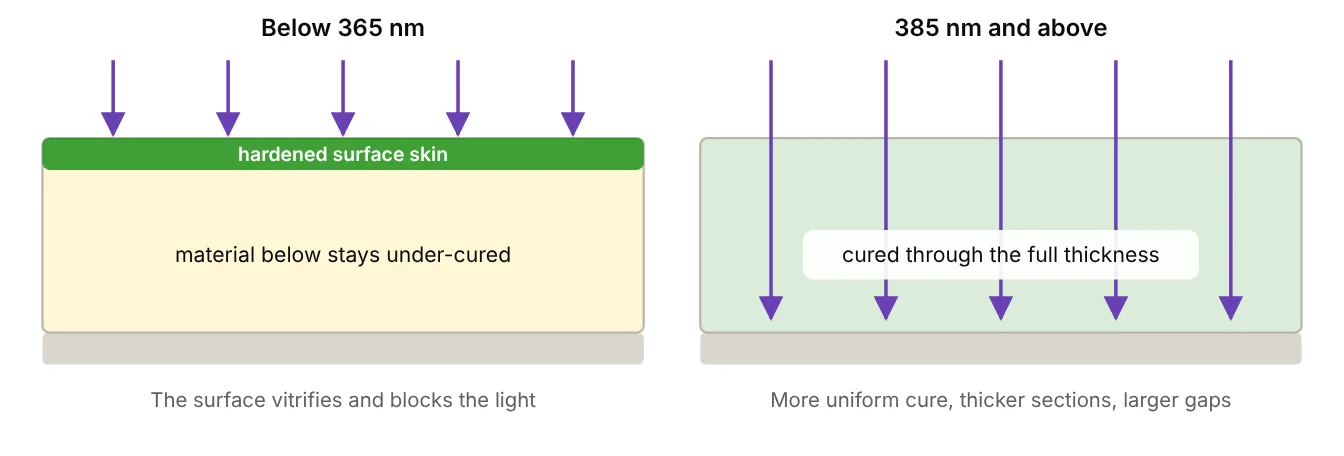
Figure 4. Why longer UVA wavelengths cure deeper.
- Photopolymer 3D printing. Resins are formulated for specific photoinitiator absorption ranges, in practice 365, 385 and 405 nm, with 405 nm the most common on the market. Resin run at the wrong wavelength cures slowly and poorly, so the source and the resin must be matched deliberately. This is relevant to manufacturers of resin 3D printers, who build a UV LED light engine into every machine, and to makers of the post-curing units that finish each printed part. Their customers include dental laboratories and hearing aid manufacturers, which print custom shells and earpieces with resins formulated for 385 or 405 nm.
UVB, 280 to 315 nm
UVB is the narrowest band and the least developed commercially. Like UVC parts, UVB LEDs convert only a small fraction of their input power into light, and the application list is short but specific.
- Phototherapy. This is the established use, and it is wavelength-critical in a way few other UV applications are. Narrowband UVB therapy for psoriasis and vitiligo uses lamps emitting between 305 and 315 nm, peaking at 311 nm. This is relevant to medical technology. Anyone building a phototherapy cabinet, a handheld treatment wand or a home therapy unit is working inside a 10 nm window.
- Horticulture. Controlled UVB triggers plant stress responses that raise secondary metabolite content. This is relevant to horticultural lighting and vertical farming equipment, with the dosing, timing and control electronics sitting in embedded systems.
UVC, 100 to 280 nm
UVC is the germicidal band. Germicidal effectiveness peaks at about 260 nm, and the germicidal range runs roughly 200 to 300 nm. Absorbed photons damage the genetic material so the organism can no longer replicate.
- Water, air and surface disinfection. The International Ultraviolet Association (IUVA) lists disinfecting water and air, disinfecting food, and UV-based advanced oxidation to destroy pollutants among the major commercial uses of UV. This is the clearest fit for firms that build disinfection equipment: point-of-use water treatment, air handling units, surface disinfection cabinets, and the disinfection stages built into medical devices.
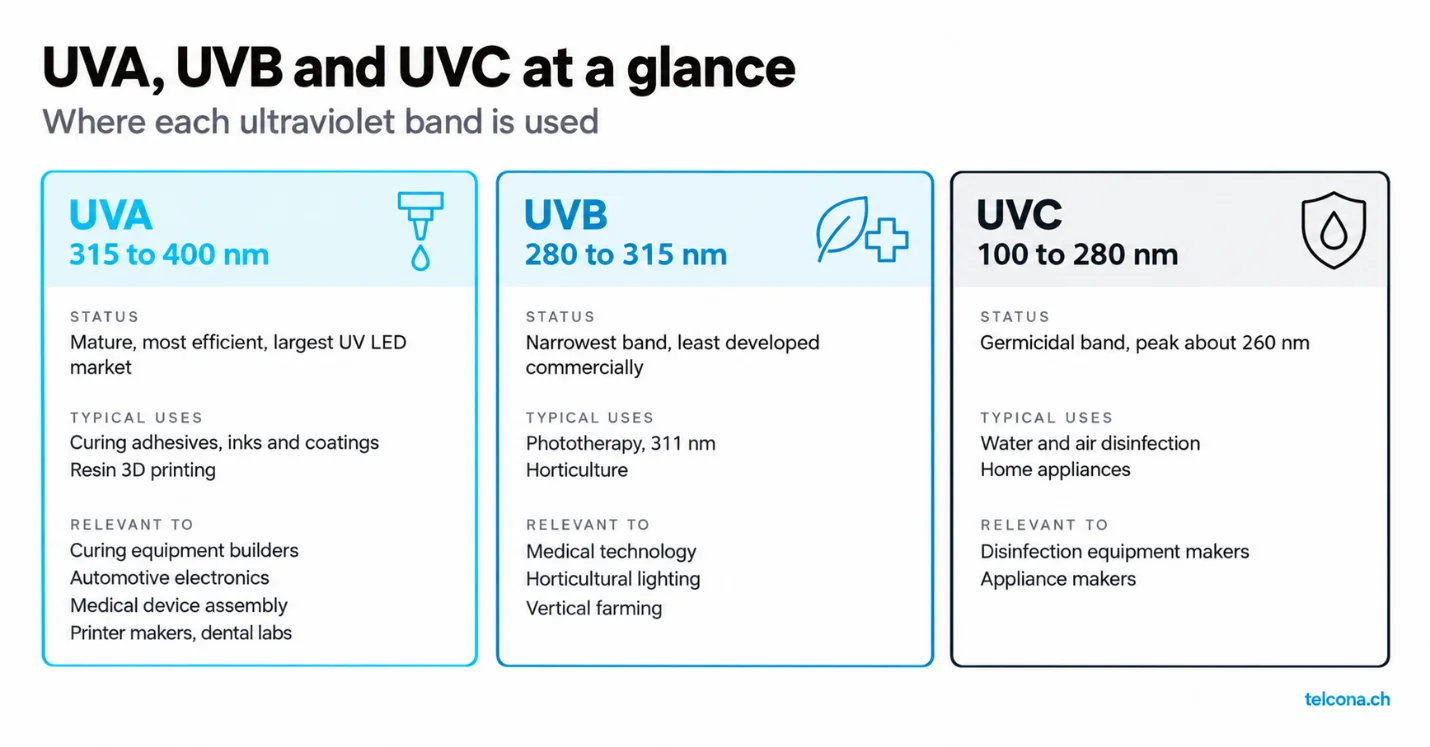
Figure 5. UVA, UVB and UVC briefly.
Where Telcona fits
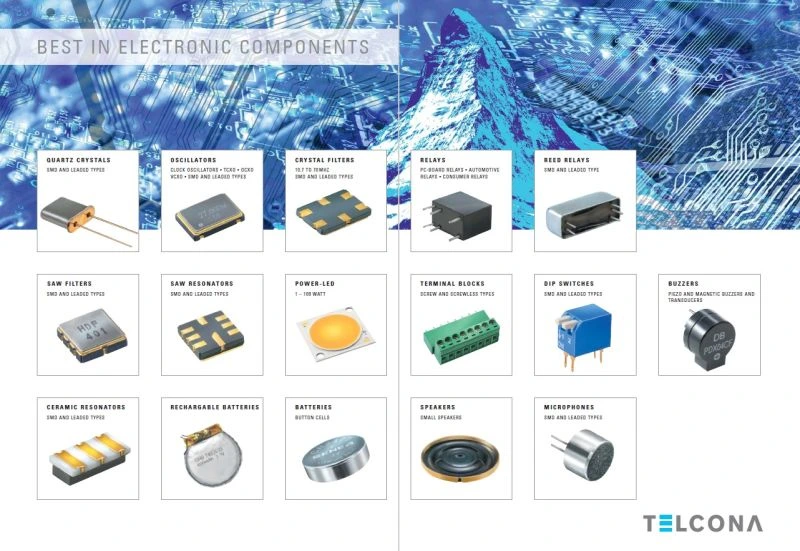
Telcona AG is a Swiss distributor and engineering partner for electronic components, and Edison Opto's authorised European distribution and engineering partner. Our engineering team in Belgrade supports UV designs from wavelength selection through drive electronics and thermal design.
Talk to our engineers
Choosing a UV LED starts with the wavelength, and the wavelength starts with your material, your process and the standards you have to meet. Tell us what you need to cure, disinfect or illuminate, and our engineers will come back with a recommendation, samples and a quotation.
Email: info@telcona.com
Phone: +41 44 861 02 40
👉 Contact Telcona, your partner from concept through series production.